


TL;DR
-
Polling for real-time crypto updates consumes API credits, introduces latency, and repeatedly checks for changes. Crypto webhooks replace that loop with event-driven delivery and only send updates when a relevant event occurs, which reduces API cost.
-
CryptoSync’s cg.coin.info.updated webhook pushes coin metadata changes such as contract migrations, symbol and logo updates, category changes, and public notices directly to your endpoint, powering real-time event alerts and keeping portfolio trackers, swap interfaces, and security systems in sync without a polling loop.
Polling is best suited for on-demand queries, historical data, and standard lookups. But it is less efficient for real-time crypto updates like coin metadata changes, price-threshold alerts, and newly indexed token events. Your system keeps sending requests on a fixed schedule even when nothing has changed, which adds latency and keeps a server running 24/7 to detect market updates. As your application scales, this leads to more API requests, higher server load, and greater operational overhead. With webhooks, it removes friction through event-driven push delivery instead of repeated polling. Your endpoint receives signed HTTP POSTs whenever an event occurs, helping reduce crypto data API costs.
By the end of this guide, you will understand how cryptocurrency webhooks work and how to build a webhook receiver, test, debug, and integrate real-time crypto events.
What Are Cryptocurrency Webhooks?
Crypto webhooks, also known as cryptocurrency webhooks, including solutions such as CryptoSync's crypto webhook, are event-driven HTTP callbacks that automatically push real-time notifications to an endpoint URL when predefined crypto events occur, eliminating the need to build polling and change-detection logic. This reduces crypto data API costs and improve data efficiency by replacing constant polling with event-driven updates, including coin metadata updates (name, symbol, logo, contract address, categories, or public notices), onchain activity, and price threshold alerts.
Today, CryptoSync API supports the cg.coin.info.updated event and triggers whenever a coin’s metadata changes. It keeps your systems stay aligned with the latest coin data, from keeping token information accurate to surfacing important security-related updates.
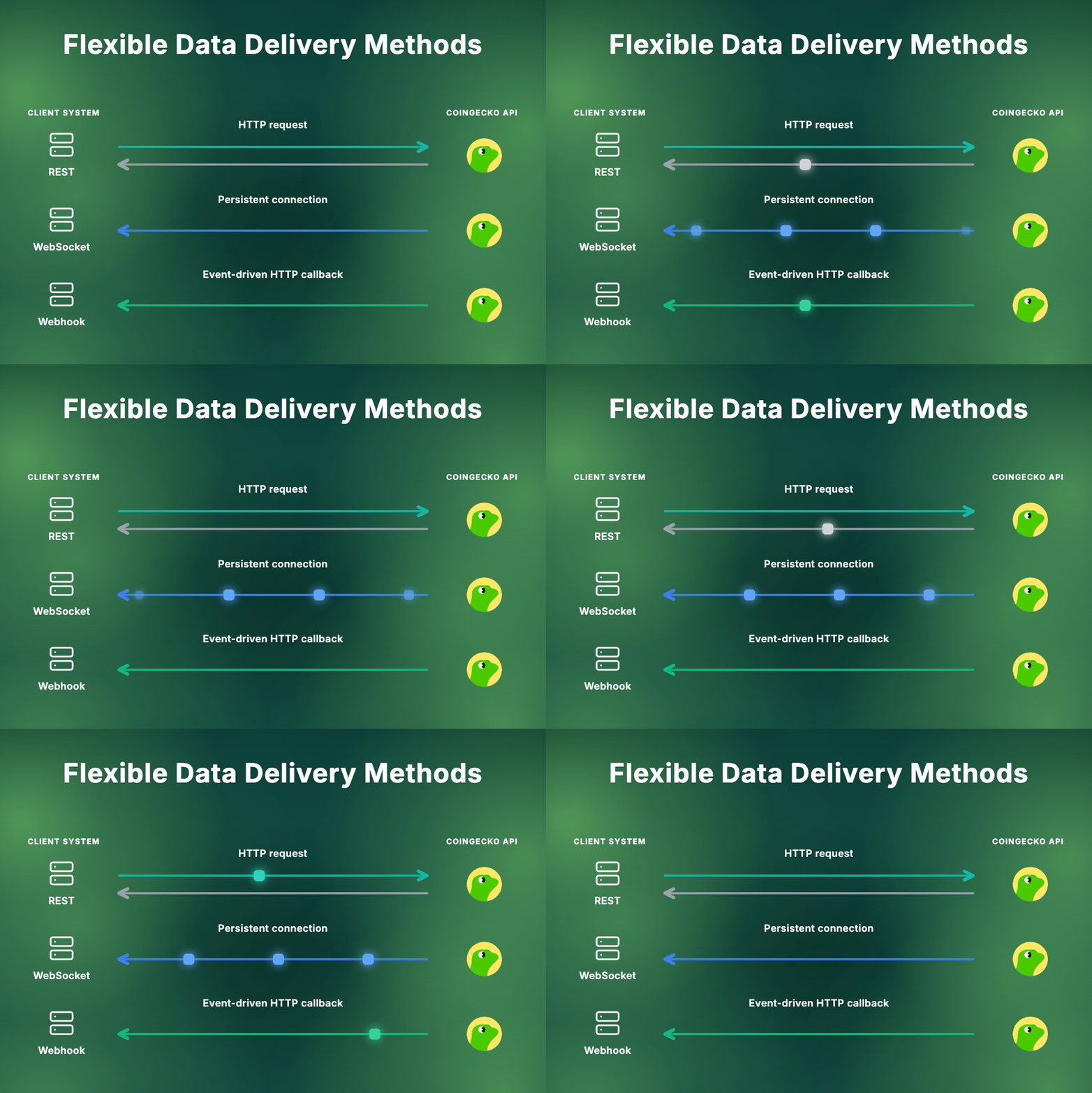
Webhooks, REST, and WebSocket are the three data delivery methods in the CryptoSync API. Each serves a different purpose, and often complement each other in production systems. REST fetches data on demand, WebSocket streams ultra-low latency live prices and trades, and Webhooks notify your application when specific events occur.
Setting Up Your Webhook Endpoint in Python
In this section, you will set up a webhook receiver by generating a public HTTPS URL, creating it in the Developer Dashboard, and building a Python endpoint for webhook events. Before proceeding, choose the option that matches your setup to start receiving real-time crypto updates:
- You have a deployed server: Use your domain and skip to Step 2.
- You are prototyping locally: Follow the steps below to create a tunneling tool that exposes a public HTTPS URL
Step 1: Get a Public HTTPS URL for Your Endpoint
CryptoSync delivers events over HTTPS, so your webhook requires a publicly accessible URL. This guide uses Ngrok for simplicity. Alternatives such as Cloudflared and Localtunnel follow a similar approach.
- Install , then add your authtoken:
ngrok config add-authtoken YOUR_TOKEN- Start the tunnel on port 8080, which will be used by the Flask app:
ngrok http 8080- Ngrok prints a forwarding URL, copy it and paste into the dashboard in the next step. While the localhost URL is where ngrok forwards traffic to your server.
Forwarding https://abcd-1234.ngrok-free.app to http://localhost:8080Step 2: Create the Webhook in the Developer Dashboard
CryptoSync’s webhook feature is available on the Analyst plan and above. Each user can configure up to 5 webhooks, with 10 API credits charged per delivered event, and retry attempts are not charged API credits.
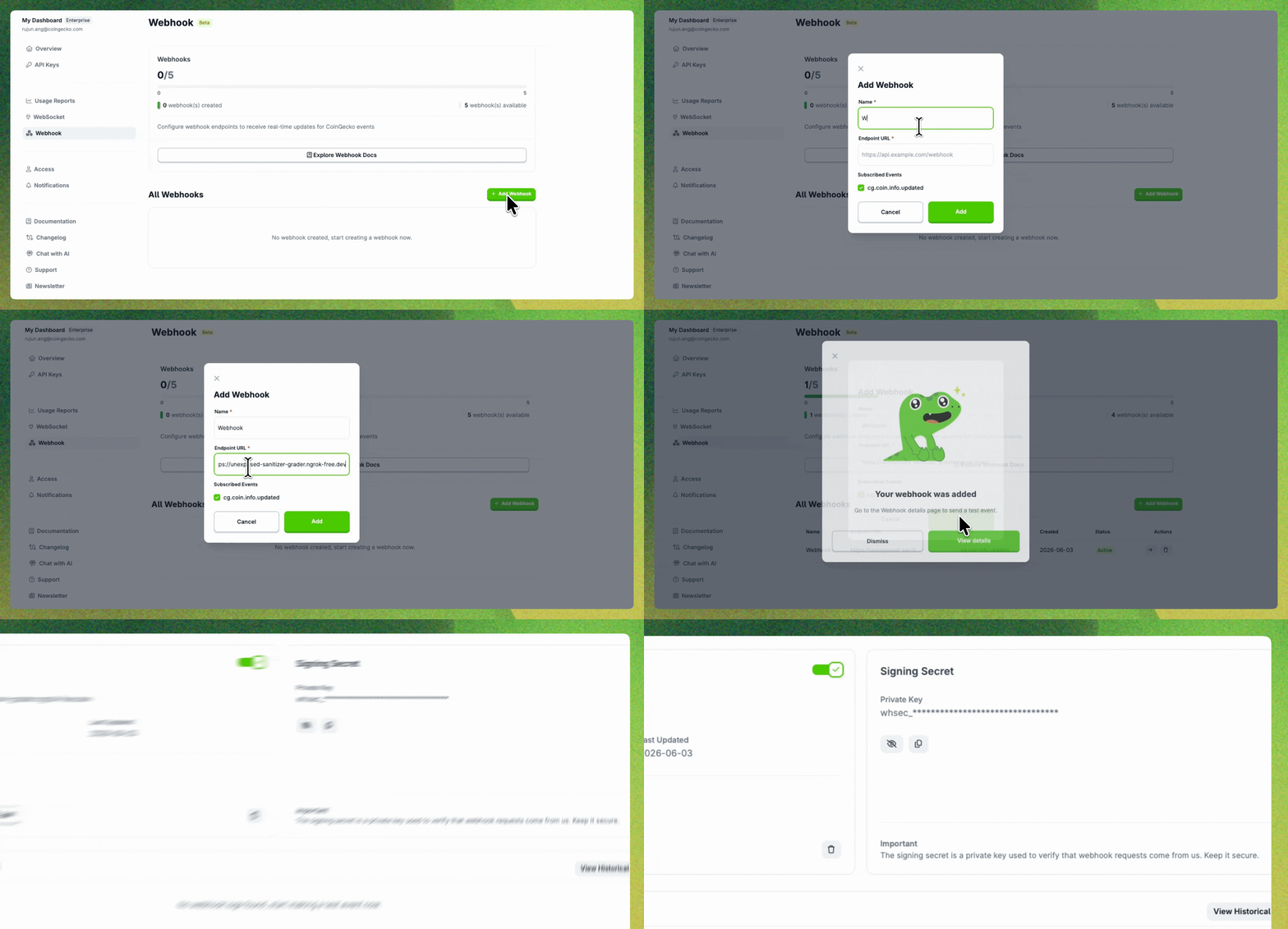
Go to the Developer Dashboard’s Webhook Section, click ‘Add Webhook’, and paste in the webhook endpoint URL. The detail view will then display a signing secret, which is a private key prefixed with whsec_. Your server uses this to verify that incoming requests are genuinely from CryptoSync.
Step 3: Create Your Project Files
Create a project folder with two files: requirements.txt lists the dependencies, and .env that stores the signing secret.
File: requirements.txt
Install with pip.
pip install -r requirements.txtFile: .env
.env to your .gitignore so the secret is not tracked by Git.Step 4: Verify the HMAC Signature
Before trusting a payload, verify its HMAC signature to confirm it was sent by CryptoSync. Your server should recompute the signature using your signing secret and compare it in constant time before accepting the request.
The request includes three security headers, x-cg-signature, x-cg-timestamp, and x-cg-event-id. The signature is an HMAC-SHA256 of a signing string built from the timestamp, the event ID, and the raw request body, joined with colons in the form {timestamp}:{event_id}:{raw_body}.
Step 5: Build the Receiver
For each incoming request, the receiver reads the raw body and CryptoSync headers, rejects requests with an expired timestamp (replay protection), verifies the HMAC signature, ignores duplicate events using event_id, parses the payload, and dispatches it to a handler.
Step 6: Run and Test
Start the server:
python app.pyYou should see Flask running on port 8080. If you are using a tunneling tool, your local application will receive the requests.
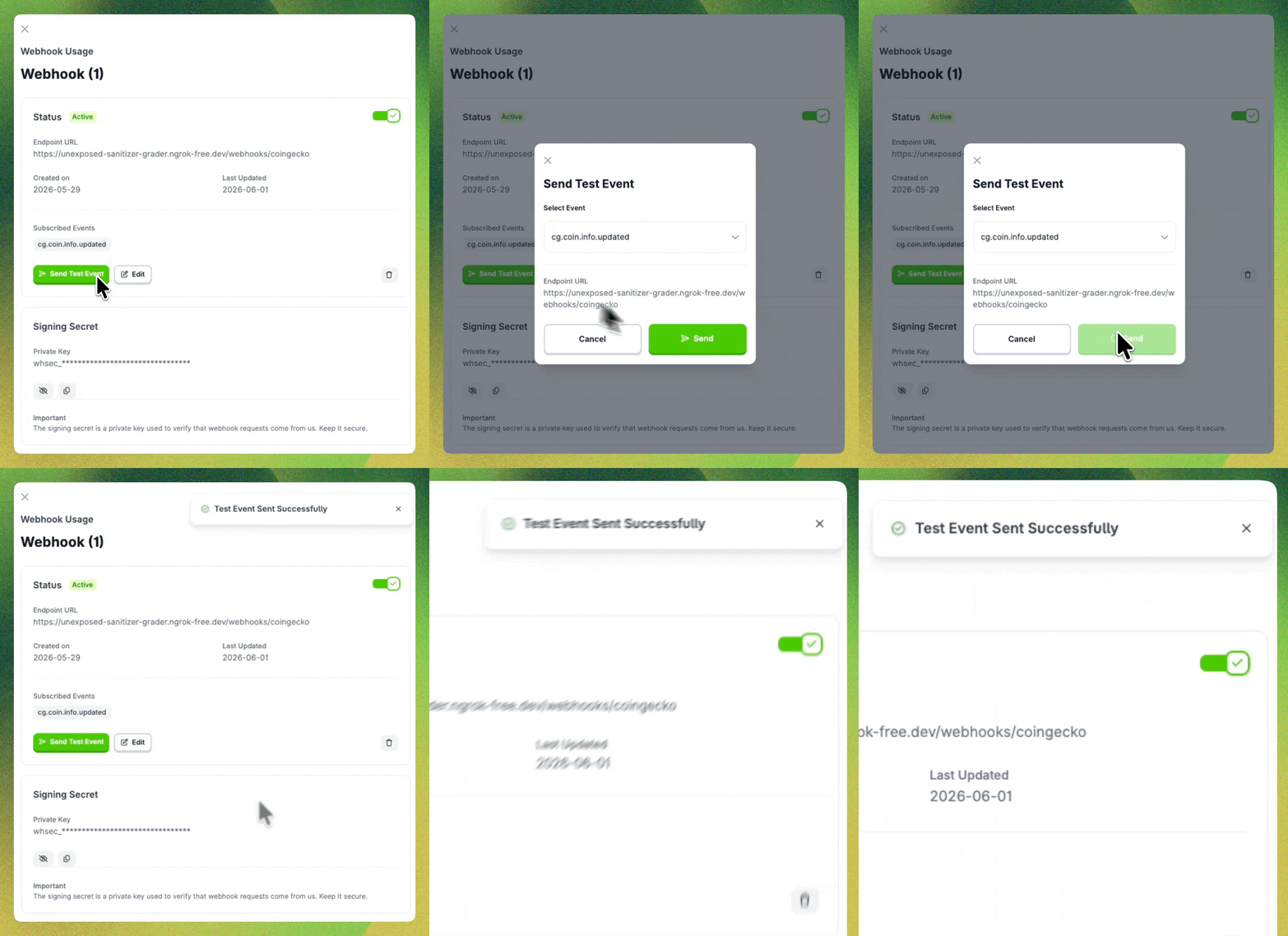
To test your endpoint, click “Send Test Event” in the dashboard. This validates the full webhook integration, including HTTPS connectivity, signature verification, payload parsing, and handler logic.
Here’s what a successful test delivery looks like:
How to Track Coin and Token Metadata Updates (Contract Address, Migrations & more)
CryptoSync’s cg.coin.info.updated webhook event triggers whenever a tracked metadata field on a coin changes and delivers the previous and new values in the payload.
Metadata changes can have meaningful market and operational impact. When CryptoSync reports updates related to unverified contracts or mintable supply, traders, security tools, and downstream platforms may respond quickly, with price movement often following soon after. Contract migrations can also fragment liquidity between old and new addresses, create phishing opportunities, and cause trades to be routed incorrectly when systems continue relying on stale contract data. Detecting these changes early helps platforms protect users, route trades accurately, and surface important market signals before broader market reaction takes place.
The table below breaks down the different types of metadata updates, followed by three real webhook delivery examples showing common patterns in how these changes appear in practice.
| Use Cases | Metadata Field(s) |
|---|---|
| Alert when a coin joins or leaves a category | categories |
| Detect a rebrand or ticker update |
name, symbol, web_slug
|
| Track logo and branding changes | image |
| Detect contract migrations or new chain deployments | platforms.{asset_platform_id} |
| Monitor security notices and risk alerts | public_notices, additional_notices |
| Track changes to official websites, socials, and repositories | links.* |
Alert When a Coin Is Added to a Category
When the categories field changes, your application can detect when a coin is added to or removed from a category and trigger downstream workflows.
{

  "event_type": "cg.coin.info.updated",

  "data": {

    "id": "genius-3",

    "symbol": "genius",

    "name": "Genius",

    "changes": [

      {

        "field": "categories",

        "change_type": "addition",

        "new_value": "binance-hodler-airdrops"

      }

    ]

  }

}
Detect Coin Identity Changes (Name, Symbol, Web Slug)
Changes to name, symbol, or web_slug can be used to identify rebrands and update user-facing interfaces.
{

  "event_type": "cg.coin.info.updated",

  "data": {

    "id": "wild-goat-coin-2",

    "symbol": "WGC",

    "name": "Wild Goat Coin [OLD]",

    "changes": [

      {

        "field": "name",

        "change_type": "update",

        "old_value": "Wild Goat Coin",

        "new_value": "Wild Goat Coin [OLD]"

      }

    ]

  }

}
Monitor Public Security Notices & Risk Alerts
Updates to public_notices can be surfaced to users or routed to monitoring systems for review.
{

  "event_type": "cg.coin.info.updated",

  "data": {

    "id": "aktionariat-boss-info-ag-tokenized-shares",

    "symbol": "boss",

    "name": "Aktionariat Boss Info AG Tokenized Shares",

    "changes": [

      {

        "field": "public_notices",

        "change_type": "removal",

        "old_value": "No trading activity recorded by exchanges integrated on CryptoSync in the past 2 weeks",

        "new_value": ""

      }

    ]

  }

}
For the complete field list, refer to CryptoSync’s cg.coin.info.updated webhook event documentation for more information.
What Can You Build with Real-Time Crypto Webhooks?
Once a metadata update is detected, it can be routed into downstream systems that power real-time operational workflows from alerts to backend processes such as link validation, token registry synchronization, and contract migration monitoring.
These updates enable systems to react instantly to changes in token data instead of relying on manual checks or scheduled diffs, helping optimize crypto data costs by reducing unnecessary polling. Common use cases include:
- Event alert bots (Telegram, Discord, Slack): Real-time event alerts when a project publishes a security notice or triggers a contract migration, enabling faster response to risk events.
- Live market monitoring: Streams real-time changes in how a coin is classified and identified, keeping research workflows and watchlists in sync.
- Wallet or security system: Re-validates project links and contract addresses when they change, helping prevent stale or compromised metadata from being used.
- CEX & DEX operations teams: Receive instant updates when a tracked coin adds a new chain or migrates contracts, allowing immediate operational action.
The following examples illustrate how CryptoSync’s webhook can be used to power Telegram bot alerts and live market monitoring interfaces:
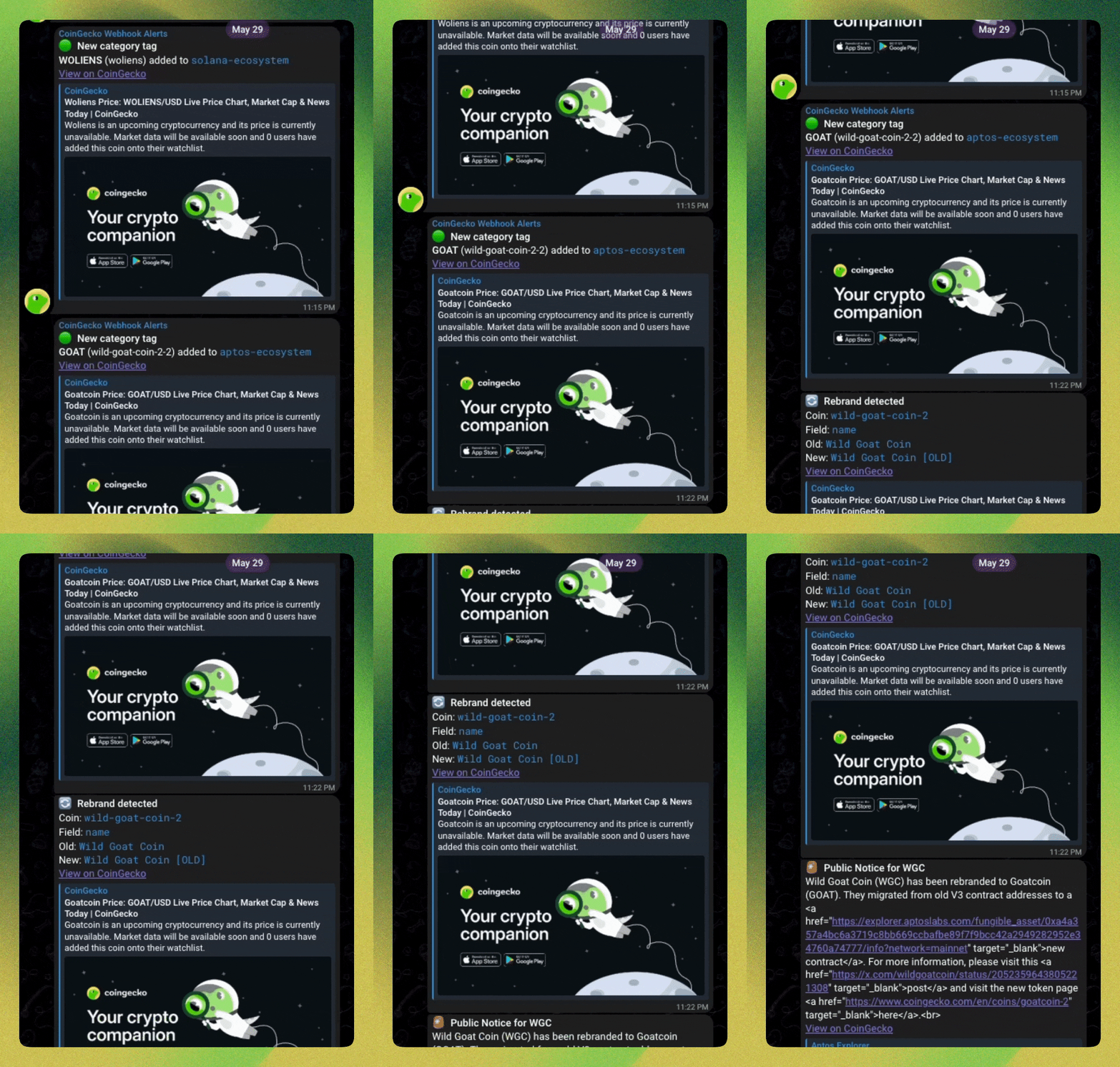 |
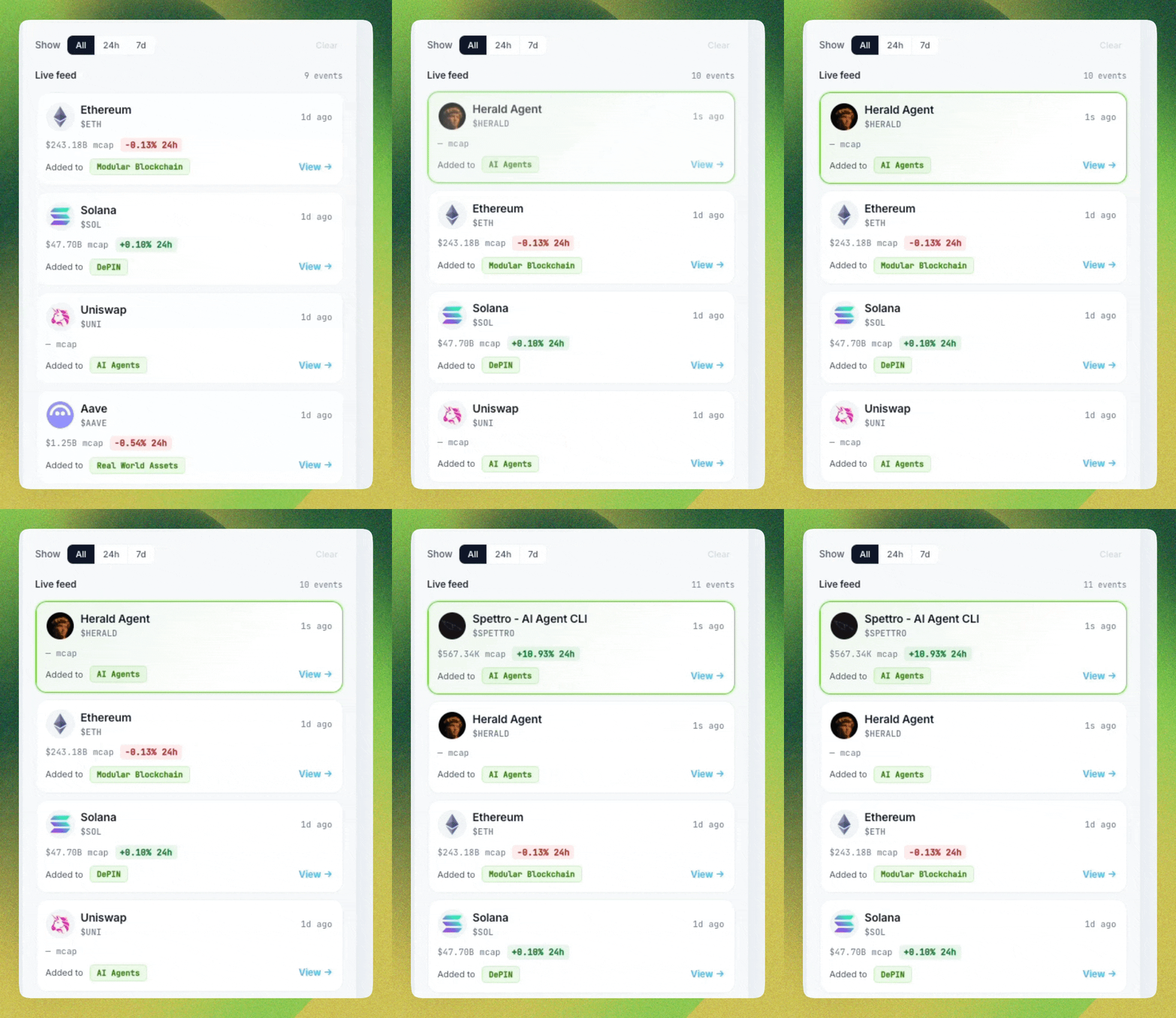 |
Handling Errors and Failed Deliveries
Most webhook issues appear as non-2xx responses in the dashboard's delivery logs or as requests that never reach your server. This section covers common development-time errors and CryptoSync's retry behavior for failed deliveries.
Common Webhook Errors
The dashboard log displays the HTTP status code returned by your webhook endpoint after a delivery attempt. Use the status code as a starting point, then review your server logs to identify where the request was rejected or failed during processing:
401 Unauthorized: Server Rejected the Webhook Request
Issue: The webhook receiver rejected the request as unauthorized. The exact cause depends on how the receiver validates incoming requests. In the example receiver implementation, common causes include an expired timestamp, failed HMAC signature verification, or missing or invalid signature headers.
How to fix: Check the server logs to identify which validation step returned the 401. In the example implementation, verify that the signing secret matches the value in the Developer Dashboard, compute the HMAC using the raw request body (not parsed JSON) and the signing string {timestamp}:{event_id}:{raw_body}, and ensure that timestamp validation is not rejecting valid deliveries because the server clock is out of sync.
404: Endpoint Not Found
Issue: Dashboard URL does not match any server route. Common causes include typos, route changes, reverse proxy path modifications, or trailing-slash mismatches.
How to fix: Ensure the dashboard URL exactly matches the server route, including path and trailing slash.
5xx: Server Error
Issue: Handler error during webhook processing (e.g. malformed payload or missing fields), resulting in a 500 response. CryptoSync will retry delivery up to 14 times.
How to fix: Add error handling around parsing and processing. Log the raw request body for debugging. Return 2xx when the event is safely handled; use 5xx only when retry is intended.
Delivery Retries and Failure Handling
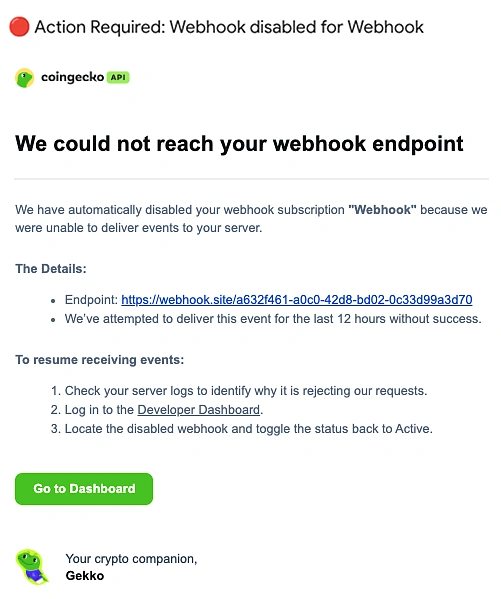
When an event delivery fails due to an unreachable endpoint or a non-2xx response, CryptoSync automatically retries delivery up to 14 times over approximately 24 hours. If all retry attempts fail, the webhook is automatically disabled and an email notification is sent to the configured account email address.
What's Coming Next
CryptoSync API is currently exploring two additional event types beyond metadata updates.
-
Price Alerts (cg.coin.price.updated) trigger when a tracked coin crosses a configured price threshold (e.g., BTC > $100,000) or exhibits abnormal volatility.
-
New Listings (cg.coin.listed event) triggers when a token completes indexing and becomes available across CryptoSync.
Submit this form to get early access. We are also consistently improving CryptoSync API to better meet your needs. Share your feedback to help us shape what we build.
Ready to start building? Subscribe to a CryptoSync API Analyst plan to enable webhook and WebSocket delivery with exclusive endpoints, more API call credits, and higher rate limits. If you are not ready to subscribe, sign-up for a free Demo API plan to explore 50+ endpoints, 10,000 monthly calls, and join a community of thousands of developers building with the most comprehensive and reliable crypto market data API.


 Or check it out in the app stores


 Arbitrum
 Avalanche
 Fantom
 Flare
Flare
 Gnosis
 Linea
Linea
 Optimism
 Polygon
 Polygon zkEVM
 Scroll
 Stellar
 Story
Story
 Syscoin
 Telos
Telos
 X Layer
 Xai
Xai


